
Bridging the Federal Retirement Income Gap: TSP, Pension, and Social Security Strategies
Bridging the Federal Retirement Income Gap: TSP, Pension, and Social Security Strategies
By Mel Stubbs
When you’re working as a federal employee, your financial life feels pretty straightforward. You get paid every two weeks, you contribute to the TSP, you earn your pension credits, and you know what to expect on payday, but once you retire, that simplicity changes.
Suddenly, you have to turn your pension, TSP, and Social Security into a steady, sustainable income that fits your lifestyle, and for most people, that’s when they discover something that surprises them: their retirement income doesn’t always equal the lifestyle they had in mind.
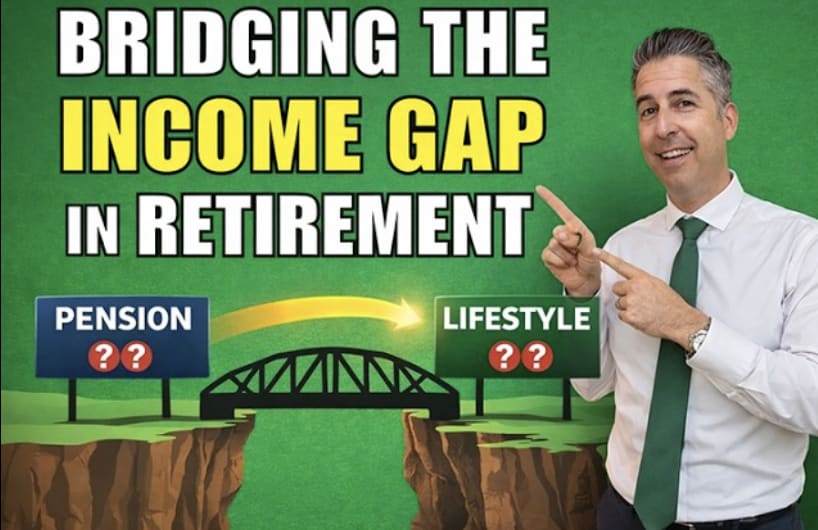
We call that the income gap — and understanding how to bridge that gap is one of the most important parts of retirement planning.
What Is the “Income Gap”?
The income gap is the space between what you have coming in every month from guaranteed sources — like your FERS pension and Social Security — and what you actually need to fund your lifestyle.
For many federal retirees, here’s how it breaks down:
- Your FERS pension might replace 30–40% of your salary
- Social Security might cover another 20–30%
- The rest — often 20% or more — has to come from your TSP, IRAs, or other savings
On paper, that seems manageable. But once you add up real-world expenses — taxes, healthcare, inflation, travel, helping family, and enjoying life — the gap can be bigger than expected.
Meet Ted and Lisa
Ted and Lisa were a couple I recently worked with — both federal employees in their early 60s. They had done so many things right:
- Maxed out their TSP contributions
- Paid off their mortgage
- Saved for emergencies
- And had a solid pension coming their way
They came in confident, ready to see the numbers confirm that they were set.
When we ran their projections, things looked great at first. But once we layered in their real goals — traveling twice a year, helping grandkids with college, and keeping money aside for healthcare — the math told a different story.
There was a $2,500 per month gap between their projected income and the lifestyle they envisioned.
That’s not financial ruin, but it was enough to force hard choices: fewer trips, less flexibility, or tapping savings faster than planned.
The good news? It’s a solvable problem — once you know it exists.
Bridging the Gap: Where to Start
So how do you fill that gap? It starts with a plan. Here are a few strategies we walked through with Ted and Lisa — and the same ones we help many of our clients use.
1. Recreate Your Paycheck from the TSP
Your TSP is designed for accumulation — not distribution. Once you retire, the challenge becomes figuring out how much to withdraw and how often.
If you take out too much, you could put your retirement in jeopardy and run out of money too soon. But if you take out too little, you might live below your means — missing out on travel, family trips, and experiences you could’ve easily afforded.
Think of it this way: you worked 30 years to earn this retirement. You deserve to enjoy it — without worrying if every withdrawal is a mistake.
That’s where having a guide helps. Someone who can model your income plan, test the numbers, and make sure your withdrawals support your lifestyle and your long-term security.
2. Optimize Your Social Security Timing
Social Security decisions can make or break your income plan.
Starting early gives you income sooner, but delaying can raise your monthly benefit for life. For couples, sometimes starting one spouse’s benefit while delaying the other’s creates the perfect balance — consistent income now, higher benefits later.
We help our clients model those scenarios so they’re not just guessing — they’re making informed, confident choices.
3. Use Roth Conversions and Tax Planning
Here’s something most retirees never think about: your traditional TSP balance isn’t all yours.
If you’ve got $500,000 sitting in a traditional TSP, you can’t spend $500,000 of it — because a portion of it belongs to the IRS.
You’re essentially sharing that account with Uncle Sam, and the problem is… you don’t know what percentage he’ll take. That depends on future tax rates — which no one can predict.
That uncertainty makes planning hard. By gradually converting part of your Traditional TSP into Roth IRAs, you can start shifting that “tax-uncertain” money into “tax-free, fully yours” money.
When you take Roth withdrawals later in retirement, you know exactly what’s yours — no surprises, no taxes, no moving target.
That kind of clarity can make a world of difference when you’re building your bridge to retirement income.
4. Consider Part-Time or Supplemental Income
Some retirees fill their income gap with something they enjoy — consulting, teaching, or part-time work that keeps them active and social.
It’s not about working because you have to — it’s about keeping options open, staying engaged, and adding a little cushion to your plan while your investments keep growing.
5. Align Investments with Your Income Needs
How your money is invested should depend on when you’ll need it.
For Ted and Lisa, we moved their TSP money into IRAs so we could build multiple strategies:
- A conservative allocation for reliable short-term withdrawals,
- And a growth allocation for money they won’t touch for 15–20 years — money designed to outpace inflation and protect their future lifestyle.
That balance gave them the best of both worlds: security today, and growth for tomorrow.
Turning a Plan into Peace of Mind
When Ted and Lisa saw their new plan laid out, they said, “For the first time, we can actually picture what retirement will look like.”
That’s the moment when numbers turn into confidence — and plans turn into peace of mind.
The Bigger Picture: Why It Helps to Have a Guide
A lot of our best clients realize something important: they don’t want to spend retirement doing the math. They want to spend it living the dream.
They don’t want to track markets, juggle accounts, or worry about tax tables. They want to travel, volunteer, enjoy family, and rest easy knowing it’s all handled.
And truthfully, there’s a lot to handle:
- Should your TSP stay where it is or move to an IRA?
- How aggressive or conservative should it be?
- Should you focus on Traditional or Roth?
- When should you claim Social Security?
- Which survivor benefit election makes the most sense?
When you’re working, it’s simple — save in the TSP and get your match. But when you retire, it’s a different world. You’re not contributing anymore — you’re distributing — and that’s where the complexity begins.
The good news? You don’t have to figure it out alone.
Partnering with someone who does this every day can save you time, money, and stress — and let you focus on the things that matter most. Because retirement isn’t just about the math — it’s about the life you want to live once the math is done.