
For rural veterinarians, loan repayment program can mean difference between staying or leaving

For rural veterinarians, loan repayment program can mean difference between staying or leaving
By R. Scott Nolen
Rural veterinary shortages, according to the U.S. Department of Agriculture’s (USDA) National Institute of Food and Agriculture (NIFA), affect livestock and public health, and can lead to inadequate animal care for farms and can threaten food security.
Congress responded to this growing national problem by authorizing and funding the Veterinary Medicine Loan Repayment Program (VMLRP). The goal is to recruit veterinarians to work in designated shortage areas in exchange for paying up to $40,000 annually for student loan principal and interest.
The USDA has designated a record 243 veterinary shortage areas across 46 states and recently opened up applications for fiscal year 2026.
Since its inception in 2010, the VMLRP has made approximately 1,000 awards as new and renewal service agreements. What follows are the accounts of former or current VMLRP award recipients. They discuss how the program has impacted their finances and career trajectory, and what more can be done to bring veterinary services where they are needed.
Growing a family and a business
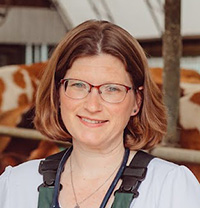
Dr. Jody Kull (Virginia-Maryland '04), of Bellefonte, Pennsylvania, described the VMLRP as "life changing."
Dr. Kull returned to Pennsylvania after veterinary college and began practicing in rural communities. She attended as an out-of-state student and graduated with approximately $150,000 in student loan debt, which she was repaying on a 30-year graduated repayment plan.
She first learned about the VMLRP shortly after the program launched as she was establishing a solo large animal practice and starting a family.
"My husband and I had just had a child, and we decided to be a single-income family given the demands of veterinary practice and on-call hours," she said.
Dr. Kull was accepted into the VMLRP in 2012 after the USDA declared a veterinary shortage area for the Pennsylvania region where she practiced. She was able to repay approximately $90,000 in student debt after four years in the program.
The program was instrumental in Dr. Kull remaining in a rural practice.
"It allowed me to continue to grow and invest money and time in my new veterinary practice," she said, as the funds made it possible to invest in new equipment, expand client services, and conduct educational outreach within her community.
At the same time, the financial stability provided by the VMLRP enabled her family to adapt to the realities of rural veterinary work. Her husband left a demanding corrections leadership role and joined the practice, managing inventory, laboratory samples, and client prescriptions.
"Receiving the VMLRP was life changing for our family," Dr. Kull said.
While strongly supportive of the VMLRP, she noted that application timing, eliminating taxation on the award amounts, and improving administrative efficiencies, including shortage area nominations, could boost the program's reach.
From clinical to public practice
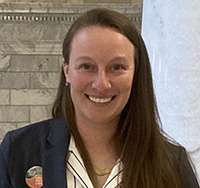
For Dr. Emily Sabo (Cornell '15), of Salt Lake City, the VMLRP has been a stabilizing force after years of uncertainty.
Dr. Sabo is the assistant state veterinarian for Utah and is beginning her second year of service in a USDA-designated public practice shortage area covering the entire state.
Her journey away from private large animal practice to public practice was shaped by a traumatic brain injury sustained at work, requiring her to leave clinical practice after only six years.
During recovery, she struggled to find positions that used her large animal expertise while remaining safe and financially viable. The state veterinarian role provided that opportunity, though she noted that government salaries remain low relative to the cost of living in Salt Lake City.
Dr. Sabo was familiar with the VMLRP since its earliest days. As a veterinary student, she participated in the annual AVMA legislative fly-in and lobbied Congress for the program’s creation.
As a result of her participation in the VMLRP and in Utah's own veterinary student debt repayment program, Dr. Sabo has been able to pay down the principal and some accrued interest on her student loan debt.
"I’ve been on an income-based repayment plan since graduation, and my payments have been too low to even cover interest," resulting in loan growth despite consistent payments, Dr. Sabo explained. Thanks to the VMLRP, though, her repayment timeline has been drastically reduced. "Instead of another 20 years, I should be able to pay off the majority of my loans after three years of government service."
In her regulatory role, Dr. Sabo sees veterinary shortages daily.
"Overworked and under-resourced veterinarians are the largest barrier to adequate veterinary services," she said, adding that many rural practitioners lack time, staffing, and the ability to charge fees that reflect the true cost of care.
While she described the VMLRP as "extremely helpful and necessary," Dr. Sabo characterized it as a stopgap rather than a solution. High educational debt, shifting federal repayment rules, corporate consolidation among veterinary practices, and limited rural ownership opportunities continue to drive veterinarians away from food animal medicine, she said.
"VMLRP allows me to stop searching for supplemental work and fully commit to serving Utah's animal health needs. But until the underlying financial pressures are addressed, programs like this will remain essential just to keep the system from breaking further," Dr. Sabo said.
Rural advocacy
The VMLRP was instrumental to Dr. Katie Schlist (Illinois '15), of Mound, Minnesota, building a long-term career in rural food animal medicine with the added benefit of helping pay down her educational debt.
For five years, Dr. Schlist was a VMLRP participant in a designated shortage area encompassing central and west-central Minnesota. She worked primarily in egg-laying poultry production during that time, gaining extensive on-farm experience that included supporting farm managers and animal care teams.
Dr. Schlist learned about the VMLRP while researching ways of managing student loan debt during her veterinary college application process.
The program was financially transformative for Dr. Schlist. She expects to have her student loans fully paid off within about a year.
While her employer paid her below market rate, the federal funds closed the gap.
"The VMLRP brought my total compensation up to a very reasonable rate," she said, allowing her to remain in rural practice without letting interest accumulate on her loans.
Dr. Schlist acknowledged some administrative challenges during her participation in the program, including staff turnover and shifting reporting requirements.
"These changes are really pretty minor, especially compared to the benefit I received," she said.
She also described broader challenges facing rural large animal veterinarians, from financial constraints to safety concerns. Rural practitioners often work alone, without staff support, and may lack reliable animal handling facilities or lighting, for example. Emergency on-call schedules and the realities of rural living, including limited access to services and broadband, add further strain.
These factors, combined with lower pay compared with companion animal practice, continue to drive shortages of rural mixed and large veterinarians, according to Dr. Schlist.
Still, she said the VMLRP helped her gain specialized experience she plans to carry forward.
"Because I was able to gain so much experience working with egg-laying chickens, I will continue to seek employment and professional opportunities in this field," she said.
Dr. Schlist hopes policymakers and the public better understand the importance of food animal veterinarians in rural America.
"We are partners with farmers and customers to give farm animals the best life possible and ensure a wholesome food product," she said. "We love caring for these animals and want to help give them safe and healthy lives."
Source here