
NAFV 2026 Actions, Outcomes & Next Steps
NAFV 2026 Actions, Outcomes & Next Steps
By: National Association of Federal Veterinarians
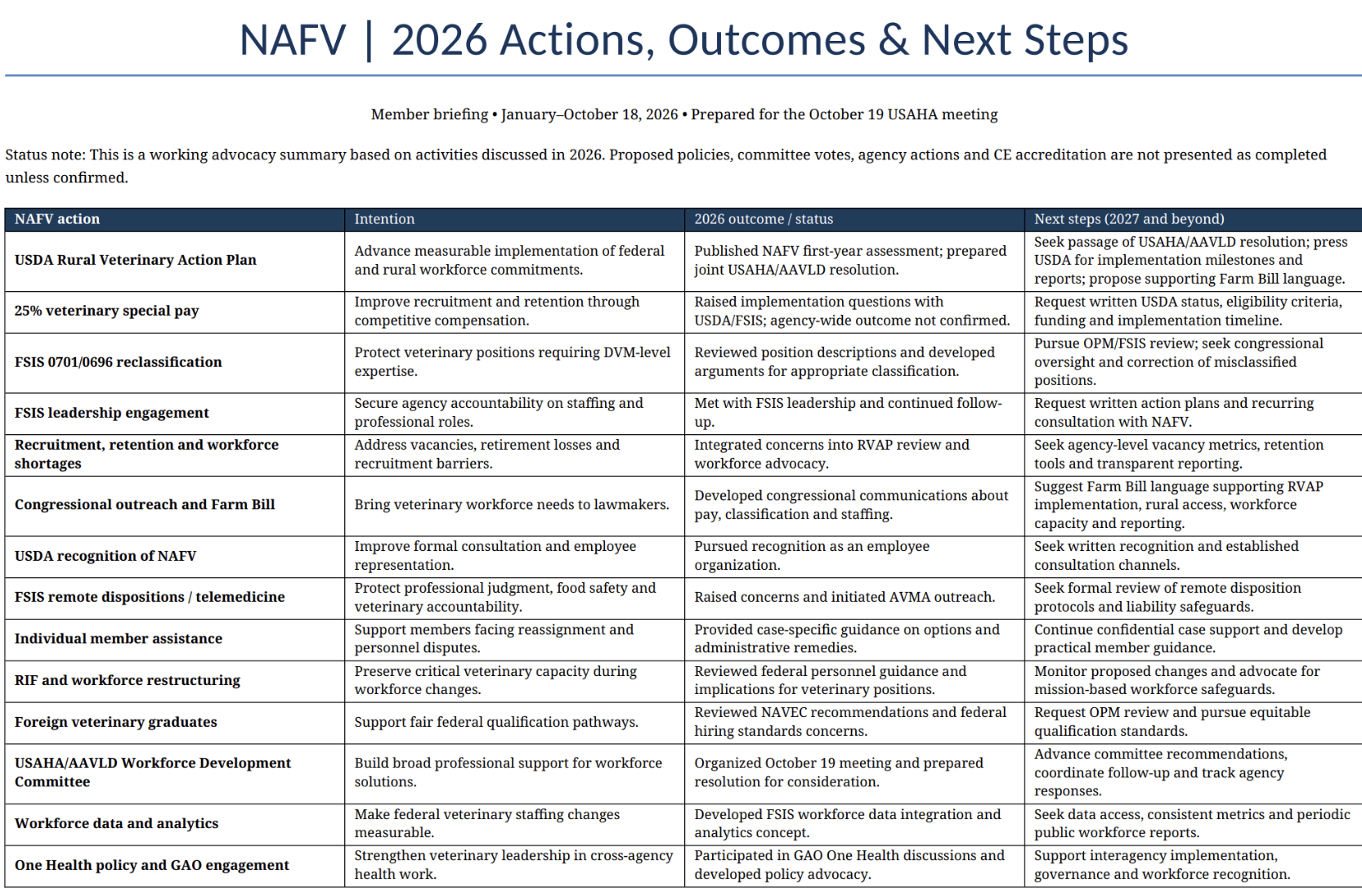
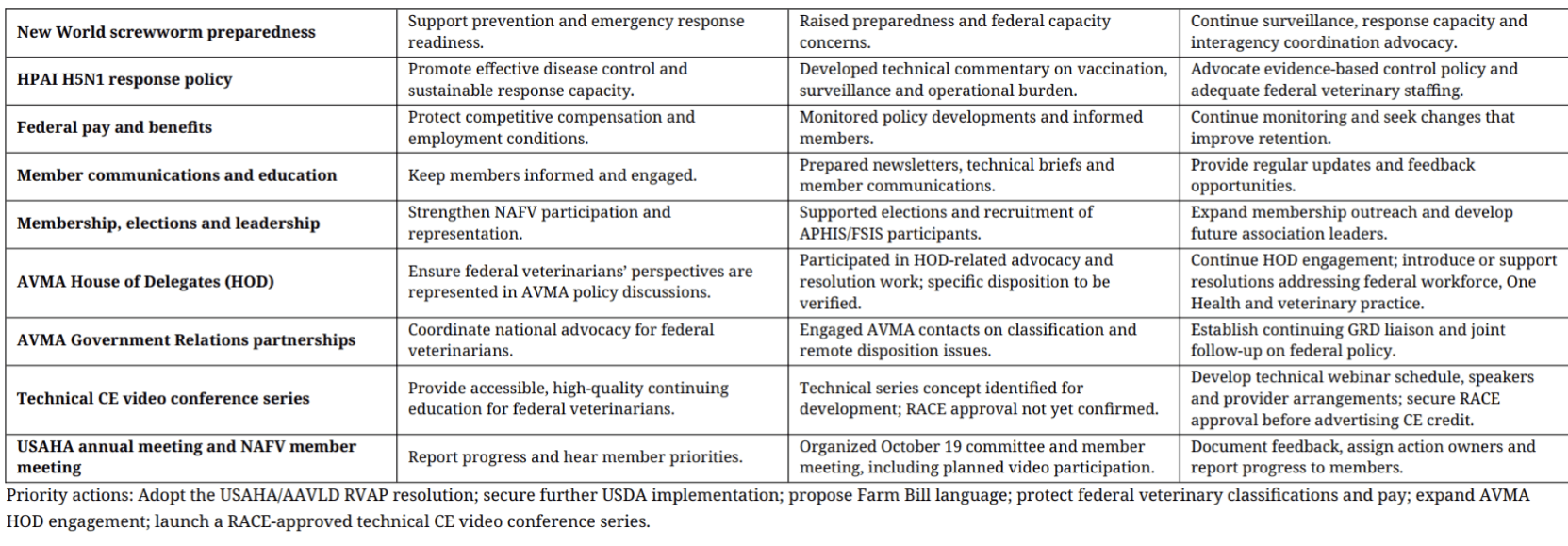
This chart distributed summarizes NAFV’s major activities during 2026, what we were trying to accomplish, the progress we’ve made, and where we intend to go next.
It’s important to understand that much of NAFV’s work involves advocacy. We don’t always get immediate results, particularly when dealing with federal agencies, personnel policies, or legislation. But we can measure progress by the issues we’ve brought forward, the relationships we’ve established, and the actions we’ve taken to represent federal veterinarians.
How to Read the Chart
The chart is organized into four columns:
- Action: The issue or activity NAFV worked on during 2026.
- Intention: What we were trying to accomplish and why it matters to federal veterinarians.
- Outcome: What actually happened during the year, including progress made and issues that remain unresolved.
- Next Steps: What NAFV plans to pursue during the remainder of 2026 and into 2027.
The last column is particularly important because many of these issues require sustained attention over several years.
Major Areas of Activity
1. Federal Veterinary Workforce and Compensation
A major focus this year has been implementation of USDA’s Rural Veterinary Action Plan, including recruitment, retention, and compensation.
We’ve continued to advocate for the 25% veterinary special pay, appropriate salary adjustments, and stronger recruitment and retention incentives.
We have also challenged the reclassification of FSIS veterinary positions from the 0701 Veterinary Medical Officer series to the 0696 Consumer Safety series, particularly when those positions continue to require veterinary expertise.
These issues remain among our highest priorities.
2. USDA Rural Veterinary Action Plan
NAFV completed a first-year assessment of the RVAP, identifying areas where USDA needs to demonstrate greater progress.
Our next immediate step is to seek passage of the USAHA/AAVLD joint resolution supporting further implementation of the plan.
We also intend to work with USDA to establish clearer implementation timelines and measurable results, and explore language for inclusion in the next Farm Bill that would strengthen federal veterinary workforce provisions.
3. Congressional and Agency Engagement
We’ve worked to bring federal veterinary workforce concerns directly to USDA leadership, congressional offices, and other decision-makers.
This includes staffing shortages, compensation, workforce restructuring, professional classification, and the importance of maintaining veterinary expertise in federal programs.
These relationships will remain important as we move toward legislative and administrative solutions.
4. Professional Representation and AVMA House of Delegates
NAFV has continued its engagement with AVMA, including work involving the House of Delegates, to ensure that federal veterinary perspectives are considered in national veterinary policy discussions.
Our next steps include strengthening that representation, advancing relevant resolutions, and coordinating with AVMA leadership on workforce and professional practice issues.
5. Member Representation and Workplace Issues
Not all our work involves national policy. We’ve also assisted individual members with employment concerns, reassignments, personnel policies, and questions about their professional responsibilities.
This is an important part of what NAFV does, and we intend to continue providing members with direct assistance and guidance.
6. Professional Education and Technical Programs
We are working to develop a technical continuing education series using video conferences.
Our objective is to offer high-quality educational programs relevant to federal veterinarians and obtain RACE approval so participants can earn recognized continuing education credit.
This could become a valuable recurring membership benefit while strengthening professional development across the federal veterinary workforce.
7. One Health, Animal Disease Preparedness, and Food Safety
NAFV has continued to engage on One Health, highly pathogenic avian influenza, New World screwworm preparedness, and emerging issues involving federal veterinary responsibilities.
We have also raised concerns about the use of remote veterinary dispositions in FSIS and the need to preserve veterinary professional judgment and accountability.
These issues demonstrate that our advocacy extends beyond pay and personnel matters to the effectiveness of federal veterinary programs themselves.
Looking Ahead to 2027
Our goal for the coming year is to turn advocacy into measurable results.
That means continuing to press for RVAP implementation, obtaining meaningful action on compensation and classification issues, strengthening our congressional relationships, advancing appropriate Farm Bill provisions, expanding our educational programs, and increasing NAFV membership and participation.
We also want members to help us identify emerging problems before they become larger workforce or professional practice issues.
We encourage everyone to review the chart, particularly the Next Steps column.
It shows not only what NAFV has been doing on behalf of federal veterinarians but also where we intend to concentrate our efforts moving forward.
We welcome your questions, suggestions, and participation. NAFV is most effective when members bring their concerns to us and help establish our priorities.
Thank you for your continued membership and support.