
New World Screwworm in the United States: Current Status, Sterile-Fly Capacity, and the Road Ahead
New World Screwworm in the United States: Current Status, Sterile-Fly Capacity, and the Road Ahead
By: Dr. Joseph Annelli
Status updated July 17, 2026
New World screwworm (NWS) has returned to the continental United States after decades of successful exclusion. The detection does not yet mean that the parasite is broadly established across the country, but it represents a serious animal-health emergency requiring sustained federal, state, tribal, industry, veterinary, wildlife, and public-health coordination. The immediate challenge is to determine how widely NWS may already be distributed while producing and releasing enough sterile flies to suppress reproduction faster than the wild population can expand.
What Has Been Confirmed
USDA's Animal and Plant Health Inspection Service confirmed the first U.S. animal case associated with the current outbreak on June 3, 2026, in a calf in Zavala County, Texas. Additional detections followed, requiring epidemiologic investigations, quarantine zones, animal movement controls, intensified surveillance, and sterile-fly releases.
As of July 17, the Texas Animal Health Commission reported cases in 13 Texas counties involving 29 premises. Because counts and case classifications are changing as investigations proceed, USDA's online confirmed-detections dashboard and the applicable State Animal Health Official websites should be treated as the authoritative sources for current case and zone information.
USDA distinguishes an active animal case from an inactive animal case. An animal may recover and no longer require treatment while the surrounding geographic infested zone remains active. Consequently, a declining number of active animals does not by itself mean that the area has been cleared of NWS.
Confirmed Cases Are Only the Visible Portion of the Outbreak
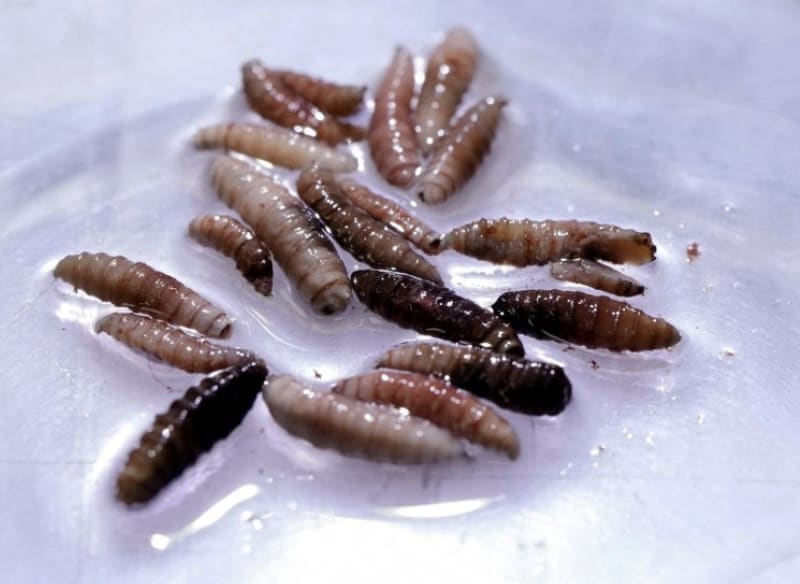
NWS larvae develop in wounds or natural body openings of living, warm-blooded animals. A single infested animal may be detected and treated, but the adult female fly that deposited the eggs may already have mated and may have laid additional egg masses on other animals.
This creates an important distinction among the number of confirmed infested animals, the area in which reproducing flies may be present, and the larger surveillance area in which additional infestations or wild flies could still be found. The confirmed case count therefore represents the minimum known burden, not necessarily the full biological footprint.
The true extent of the outbreak will depend heavily on whether NWS has entered free-ranging animal populations. White-tailed deer, feral swine, coyotes, exotic ungulates, and other wildlife can sustain transmission without being readily observed. USDA has reported examination of more than 1,600 wild animals in high-risk Texas counties without evidence of NWS. That is encouraging, but it does not exclude localized, low-density, or newly emerging wildlife transmission.
The Federal and State Response
USDA, the Texas Animal Health Commission, New Mexico authorities, and other partners are conducting epidemiologic investigations, animal tracing, trapping, treatment, wildlife surveillance, public outreach, and sterile-fly releases.
Response actions around confirmed detections have included 20-kilometer infested zones, quarantines, movement controls, heightened surveillance, additional trapping, wildlife management measures, and targeted outreach to veterinarians and animal owners. USDA has also activated the Moore Air Base dispersal facility in Edinburg, Texas, so sterile-fly operations can be redirected rapidly to Texas and northern Mexico.
These measures are appropriate, but their effectiveness depends on rapid reporting. Veterinarians and animal owners should immediately investigate wounds that are enlarging, draining, malodorous, unusually painful, or visibly infested with eggs or larvae. Lesions around the nose, ears, eyes, genitalia, umbilicus, and other body openings deserve particular attention.
The U.S. food supply remains safe. NWS is a parasite of living tissue and is not a foodborne infestation. CDC reports that no locally acquired human infestations have been identified in the United States during the current outbreak. Human infestation remains possible, however, particularly when a person has an open wound and is exposed where wild NWS flies are circulating.
Sterile Insect Technique Remains the Principal Eradication Tool
The sterile insect technique was central to the original eradication of NWS from the United States. Large numbers of laboratory-reared flies are sterilized and released over affected areas. Female NWS flies generally mate only once. When a wild female mates with a sterile male, her eggs do not hatch, progressively reducing the reproductive capacity of the wild population.
This method is proven, but it is not instantaneous. Success requires repeated releases at sufficient density across the entire area where wild flies are reproducing. If the release zone is too small, if production is inadequate, or if untreated infestations continue producing wild flies outside the release area, suppression will take longer and geographic spread may continue.
Current Sterile-Fly Production and Dispersal
The COPEG facility in Pacora, Panama, remains the only fully operational NWS production facility in North America. It produces and disperses approximately 100 million sterile flies per week. Those flies must support operations extending from Central America and Mexico to the U.S. border and now into affected portions of the United States.
USDA is investing $21 million to renovate and convert an existing fruit-fly facility in Metapa, Mexico. Once complete, the facility is expected to add approximately 60 million to 100 million sterile NWS flies per week. USDA states that Mexico expects production to begin as early as summer 2026, although colony development, quality assurance, irradiation, transport, and biological commissioning will determine when full sustained output is achieved.
USDA and the U.S. Army Corps of Engineers are also constructing a domestic production facility at Moore Air Base in southern Texas with a projected capacity of 300 million sterile flies per week. The separate Moore Air Base dispersal facility is operational and can disperse up to 100 million flies per week. Dispersal capacity should not be confused with production: it can release only the number of viable sterile pupae supplied to it.

What Determines How Quickly Production Can Expand
A facility may be structurally complete before it can sustain full biological production. The speed of the ramp-up will depend on construction and equipment installation, colony development, strain performance, irradiation capacity, quality control, staffing, transportation, aircraft availability, and the ability of sterile males to remain competitive after handling and release.
For that reason, expansion should be viewed as a production ramp rather than a single activation date. Even after additional capacity becomes available, allocation decisions will remain difficult because sterile flies are needed simultaneously to suppress populations in Central America and Mexico, reinforce the border, and respond to U.S. detections.
How Far Might the Outbreak Extend?
The known detections demonstrate that NWS has reached multiple Texas counties. They do not yet demonstrate continuous, self-sustaining transmission across Texas or neighboring states. At the same time, scattered confirmed cases can represent a larger area of low-density fly circulation than animal case maps initially reveal.
The potential biological footprint should therefore be considered larger than the collection of affected premises. Trapping results, genetic and epidemiologic links among cases, animal movement histories, environmental suitability, and the presence or absence of wildlife infestations will ultimately define the true extent.
Scenario 1: Localized introduction and rapid containment
Under the most favorable scenario, current detections represent a limited number of introductions or relatively small transmission clusters. Surveillance finds few wild flies, wildlife remains largely unaffected, and treatment combined with intensive sterile-fly releases interrupts reproduction. Under these conditions, the principal outbreak area could remain regional and eradication could be achieved through a concentrated campaign.
Scenario 2: Broader but still regional establishment
A more challenging scenario would involve multiple breeding pockets across southern, western, or central Texas, with occasional detections in New Mexico or other adjoining areas. Some wildlife involvement could occur without producing an immediately obvious wave of animal cases. This scenario would require expanded trapping, larger release polygons, substantially more sterile flies, and operations sustained through multiple fly generations.
Scenario 3: Extensive wildlife establishment
The most serious scenario would be establishment in free-ranging wildlife across a broad area. Wildlife transmission could create a persistent source of fertile flies and make animal-by-animal control impossible. The response would then have to transition fully from containment of individual incidents to an area-wide eradication campaign, potentially requiring releases over large portions of Texas and neighboring states for several years.
At present, there is insufficient evidence to assign a defensible probability to any one scenario. The absence of NWS in wildlife examined to date is encouraging, but additional surveillance is needed before extensive wildlife establishment can be excluded.
The Next Several Months Will Be Decisive
The immediate outlook remains guarded but not pessimistic. The United States retains experienced personnel, proven eradication technology, federal and state veterinary infrastructure, diagnostic capacity, and the ability to mobilize additional resources.
The principal vulnerabilities are time, workforce, and sterile-fly supply. The program must find infestations before they produce additional generations, maintain animal movement controls, identify possible wildlife transmission, and expand sterile-fly production without weakening suppression efforts elsewhere in the Americas.
For federal veterinarians, this event is also a reminder that eradication programs depend on more than facilities and aircraft. They depend on veterinarians, entomologists, diagnosticians, wildlife specialists, animal-health technicians, emergency coordinators, logisticians, contracting officials, communications personnel, and regulatory officers.
Sterile flies may ultimately eliminate NWS, but a trained and adequately staffed public veterinary workforce must first determine where to release them, investigate every detection, manage affected animals, enforce movement requirements, communicate risk, and sustain operations for as long as eradication requires.
Author's Assessment
The United States is still within a meaningful containment window, but that window cannot be assumed to remain open. The current case map almost certainly understates the area in which surveillance must operate. Whether the outbreak remains a regional emergency or becomes a prolonged national eradication campaign will be determined by the speed of detection, the degree of wildlife involvement, the maintenance of movement controls, and the rate at which sterile-fly production can be increased.
The expected combined production capacity of roughly 460 million to 500 million sterile flies per week is encouraging. Nevertheless, the decisive metric is not theoretical capacity; it is the sustained number of high-quality sterile males delivered at the correct density over every active breeding area. Biology—not construction announcements—will determine when the program has regained the advantage.
Editor’s Note, AI Disclosure, and Disclaimer
This article was prepared with editorial assistance from OpenAI's ChatGPT to improve organization, readability, and drafting efficiency. All factual information and cited data were reviewed against official sources by the author. The interpretations, professional opinions, assumptions, projections, and conclusions are those of the author and were independently evaluated and approved before publication. The author accepts full responsibility for the accuracy, integrity, and content of the article. ChatGPT is not listed as an author and did not exercise independent scientific or editorial judgment.
The projections in this article are informed professional assessments based on information available as of July 17, 2026, and on published USDA facility plans. They illustrate potential operational scenarios and should not be interpreted as official forecasts, policy statements, or commitments of USDA, NAFV, or any other governmental agency. Case counts, zone boundaries, facility schedules, production output, and release operations may change rapidly. Readers should consult USDA APHIS and the relevant State Animal Health Official for current requirements and official situation data.
References
1. U.S. Department of Agriculture, Animal and Plant Health Inspection Service. USDA Confirms Presence of New World Screwworm in the United States. June 3, 2026. https://www.aphis.usda.gov/news/agency-announcements/usda-confirms-presence-new-world-screwworm-united-states
2. Texas Animal Health Commission. New World Screwworm: Texas Current Situation. Accessed July 17, 2026. https://www.tahc.texas.gov/emergency/nws.html
3. U.S. Department of Agriculture, Animal and Plant Health Inspection Service. Confirmed Detections of New World Screwworm. Updated July 12, 2026. https://www.aphis.usda.gov/animals/animal-health/livestock-and-poultry-disease/current-status/us-confirmed-cases-new-world
4. U.S. Department of Agriculture, Animal and Plant Health Inspection Service. Sterile Fly Production and Dispersal Facilities. Accessed July 17, 2026. https://www.aphis.usda.gov/animals/animal-health/livestock-and-poultry-disease/sterile-fly-production-dispersal-facilities
5. U.S. Department of Agriculture, Animal and Plant Health Inspection Service. Using Sterile Insect Technique to Fight Screwworm. Accessed July 17, 2026. https://www.aphis.usda.gov/animals/animal-health/livestock-and-poultry-disease/stop-screwworm/using-sterile-insect-technique
6. U.S. Department of Agriculture, Animal and Plant Health Inspection Service. USDA Confirms Two Additional Cases of New World Screwworm in the United States. June 2026. https://www.aphis.usda.gov/news/agency-announcements/usda-confirms-two-additional-cases-new-world-screwworm-united-states
7. U.S. Department of Agriculture, Animal and Plant Health Inspection Service. USDA Update on Coordinated Federal Response to Protect the United States from New World Screwworm. https://www.aphis.usda.gov/news/agency-announcements/usda-update-coordinated-federal-response-protect-united-states-new-world
8. Centers for Disease Control and Prevention. New World Screwworm Outbreak: Current Situation. Updated June 30, 2026. https://www.cdc.gov/new-world-screwworm/situation-summary/index.html
9. Centers for Disease Control and Prevention. About New World Screwworm. Accessed July 17, 2026. https://www.cdc.gov/new-world-screwworm/about/index.html